
Pediatric Speech Therapy for Speech, Language, and Communication
If your child is hard to understand, struggling to use words and sentences, or having difficulty understanding what others say, pediatric speech therapy can help.
At Play to Say Therapy, we provide speech and language therapy in Dumfries, VA that helps children communicate more clearly and participate more fully at home, school, and in everyday life.
Our approach is thoughtful, relationship-based, and practical for families who want support that makes sense in real life.
Signs Your Child May Need Speech or Language Therapy
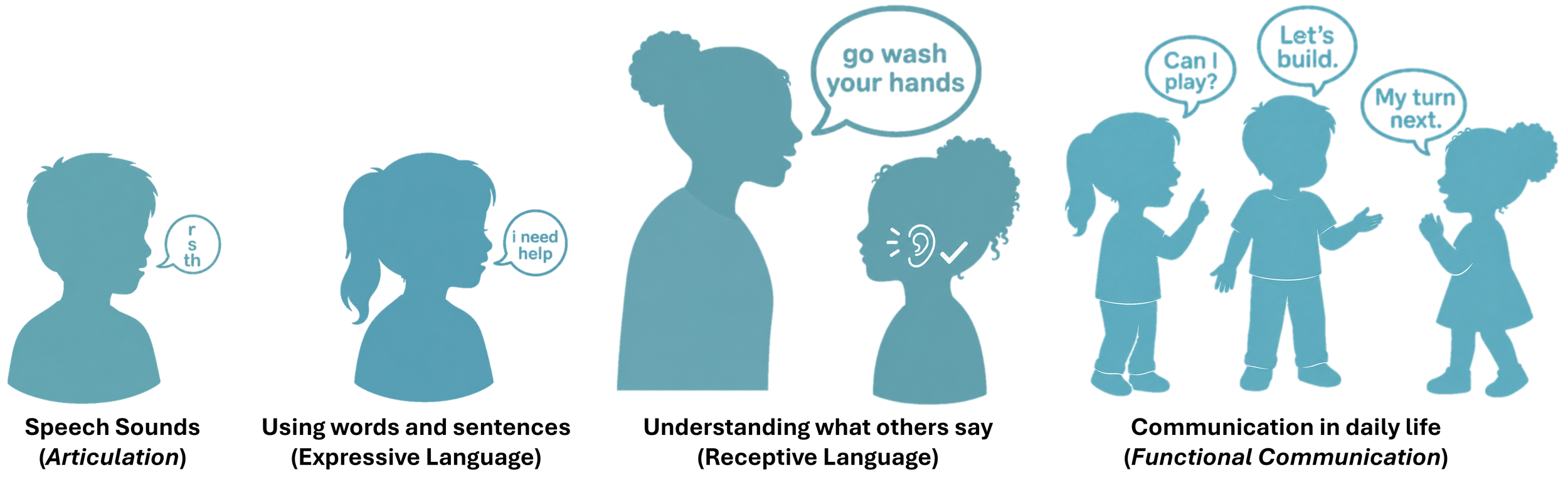
Sometimes concerns are easy to spot. Other times, parents simply feel that communication is harder than it should be.
You may notice difficulty with speech sounds, using language, understanding language, or communicating clearly during everyday routines.
Speech sounds (articulation)
Your child may be hard to understand for their age, leave sounds out of words, or say words in a way that makes them difficult for others to follow.
You might hear “wabbit” for “rabbit” or “tat” for “cat.” You may also notice that familiar listeners understand much more than new listeners do.
Using words and sentences (expressive language)
Your child may use fewer words than expected, have trouble putting words together, or struggle to tell you what happened during the day.
They may rely on pointing or gestures when they cannot find the words they want.
Understanding what others say (receptive language)
Your child may have difficulty following directions, answering questions, or keeping up when language gets longer or more complex.
You may find yourself repeating, simplifying, or breaking things down more often than expected.
Communication in daily life (functional communication)
Communication difficulties can show up as frustration, shutting down, acting out, or relying on others to guess what your child needs.
Some children want to connect but have trouble getting their message across clearly.
Some children also have difficulty using communication socially during play, conversation, and peer interaction (social communication / pragmatics).
Learn more about Social Communication and Groups
Why Early Intervention for Speech and Language Matters
Early speech and language skills support learning, relationships, and everyday participation.
They help children express wants and needs, understand others, ask questions, share ideas, follow directions, and build confidence.
When communication is harder than it should be, children may become frustrated, avoid talking, have difficulty participating in preschool or school routines, or begin to fall behind as language demands increase.
Early intervention and early speech therapy support can help address concerns before those gaps grow wider.
Getting help early does not mean something is wrong with your child. It means giving them support while speech, language, and communication skills are still developing rapidly.
How Pediatric Speech Therapy Helps
Speech and language therapy helps children build communication skills that matter in real life.
Depending on your child’s needs, therapy may help them speak more clearly, use words and sentences more effectively, understand directions and conversations, and communicate with less frustration.
Speech therapy can also support better participation at home, preschool, school, and in the community.
This is not just about practicing isolated skills. It is about helping children communicate in ways that support relationships, learning, independence, and everyday success.
For some children, speech and language challenges are also connected to early reading and spelling development.
Learn more about Speech-Language and Literacy Support for Early Readers
What We Commonly Support in Speech and Language Therapy
We support children with a range of speech, language, and communication needs.
Just as importantly, we help children get into a state where they are ready to learn, connect, and participate in therapy.
Self-regulation and readiness to participate
Before a child can do their best work in speech therapy, they need to feel safe, engaged, and ready to interact.
Some children need support with regulation, transitions, attention, or comfort before they are able to participate meaningfully.
This is one reason we often begin with play. Play helps build trust, connection, and buy-in so therapy can be both effective and positive.
Speech sounds (articulation)
Support for children who are difficult to understand, leave sounds out, substitute sounds, or need help producing speech more clearly.
Using words and sentences (expressive language)
Support for children who have difficulty using words, combining words into sentences, answering questions, telling stories, or expressing ideas clearly.
Understanding language (receptive language)
Support for children who have trouble understanding directions, questions, vocabulary, or spoken language in everyday routines.
Functional communication
Support for children who need help communicating effectively across home, school, play, and community settings.
These areas often overlap. A child who has trouble understanding language may also struggle to express themselves clearly. A child with speech sound difficulties may also become frustrated in conversation. A child who is dysregulated may not yet be ready to show what they know.
That is why we look at the whole communication system, not just one skill in isolation.
Social Communication and Groups
Literacy Support for Early Readers
Our Approach to Speech Therapy at Play to Say Therapy
At Play to Say Therapy, we take a whole-child, family-centered approach to speech and language therapy.
We know that children do not make progress simply because a goal is written on paper. Progress happens when a child is engaged, feels safe, connects with the therapist, and is ready to participate.
That is why we often begin with play, connection, and shared attention. For many children, play is not separate from therapy. It is how therapy begins.
We look beyond isolated symptoms to understand how communication difficulties affect your child’s daily life, participation, learning, and relationships.
Therapy is individualized, practical, and built around meaningful goals that support carryover across home, school, and everyday routines.
Families can expect a thoughtful clinical perspective, support for regulation and participation, practical parent coaching, and attention to the bigger picture when referrals or additional supports may be helpful.
Our goal is not just better performance in a session. Our goal is communication that works in real life.
How to Begin Therapeutic Service with Play to Say

1. Discovery Call
We begin with a brief conversation to learn about your concerns, answer questions, and determine whether Play to Say Therapy is the right fit for your child and family.
2. Evaluation
If appropriate, the next step is a comprehensive speech and language evaluation to better understand your child’s strengths, needs, and communication profile.
This helps guide recommendations and identify the most appropriate next steps.
3. Personalized Plan
If therapy is recommended, we develop a plan based on your child’s needs and your family’s priorities.
Therapy may focus on speech, language, functional communication, or a combination of areas depending on the whole picture.
4. Therapy With a Purpose
Therapy is not meant to continue forever or exist for the sake of therapy.
The goal is meaningful progress. Many of our clients meet their goals, graduate from speech, and no longer require additional speech therapy services.
We want children to gain the skills they need and families to feel confident moving forward.
Throughout the process, families can expect a partnership. You can also expect an advocate for your child’s short- and long-term well-being.
When to Reach Out for a Speech Evaluation
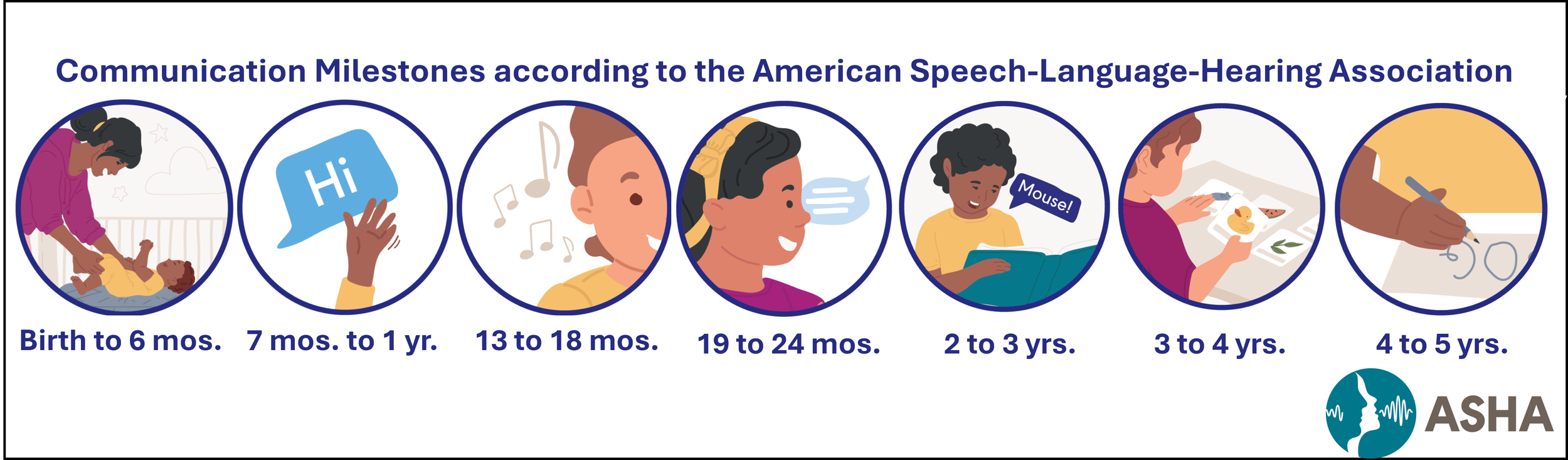
Your child is difficult to understand for their age.
Your child gets frustrated when trying to communicate.
Your child is not using as many words or sentences as expected.
Your child has trouble following directions or answering questions.
Preschool, daycare, or school has raised concerns.
You are wondering whether to wait or seek an evaluation.
You feel that communication is affecting daily life, participation, or confidence.
You do not have to wait until concerns become severe to ask questions. If something feels off, it is reasonable to reach out and talk it through.
Looking for More Specific Communication Support?
Social Communication with Groups
Support for children who need help with peer interaction, conversation, play, flexibility, perspective-taking, and social use of language.
Learn More About Social Communication
Speech-Language and Literacy Support for Early Readers
Support for children whose speech and language challenges are connected to phonological awareness, early reading, spelling, and language-based literacy development.
Learn More About Early Reader Support
Schedule a Discovery Call
You do not need to have everything figured out before reaching out.
If you are concerned about your child’s speech, language, or communication, a brief conversation can help clarify whether an evaluation or support would make sense.