
Parent Resources for Speech Therapy: FAQs, Warning Signs, and Family Guides
FAQs
-
A free discovery call is a short, 15-minute phone call with Jenn, our speech-language pathologist, to help you decide whether Play to Say Therapy is the right fit for your child and your family.
It’s an easy, no-pressure way to:
Share a bit about your child’s communication goals or challenges
Learn what to expect from our play-based approach
Ask questions about scheduling, evaluations, or insurance
Find out how soon your child could begin (most families start within 10 days!)
You don’t need to prepare anything—just a quiet moment to chat. Jenn will listen, answer your questions, and help guide you toward the best next step for your child’s needs.
-
See the Pediatric Speech, Language, and Communication Services webpage and the When to Reach Out for a Speech Evaluation section for Communications Milestones according to the American Speech-Language and Hearing Association (ASHA).
-
Within 10 days from completing an evaluation.
Contact me and fill out an intake form so I can best understand your family’s and child’s needs. -
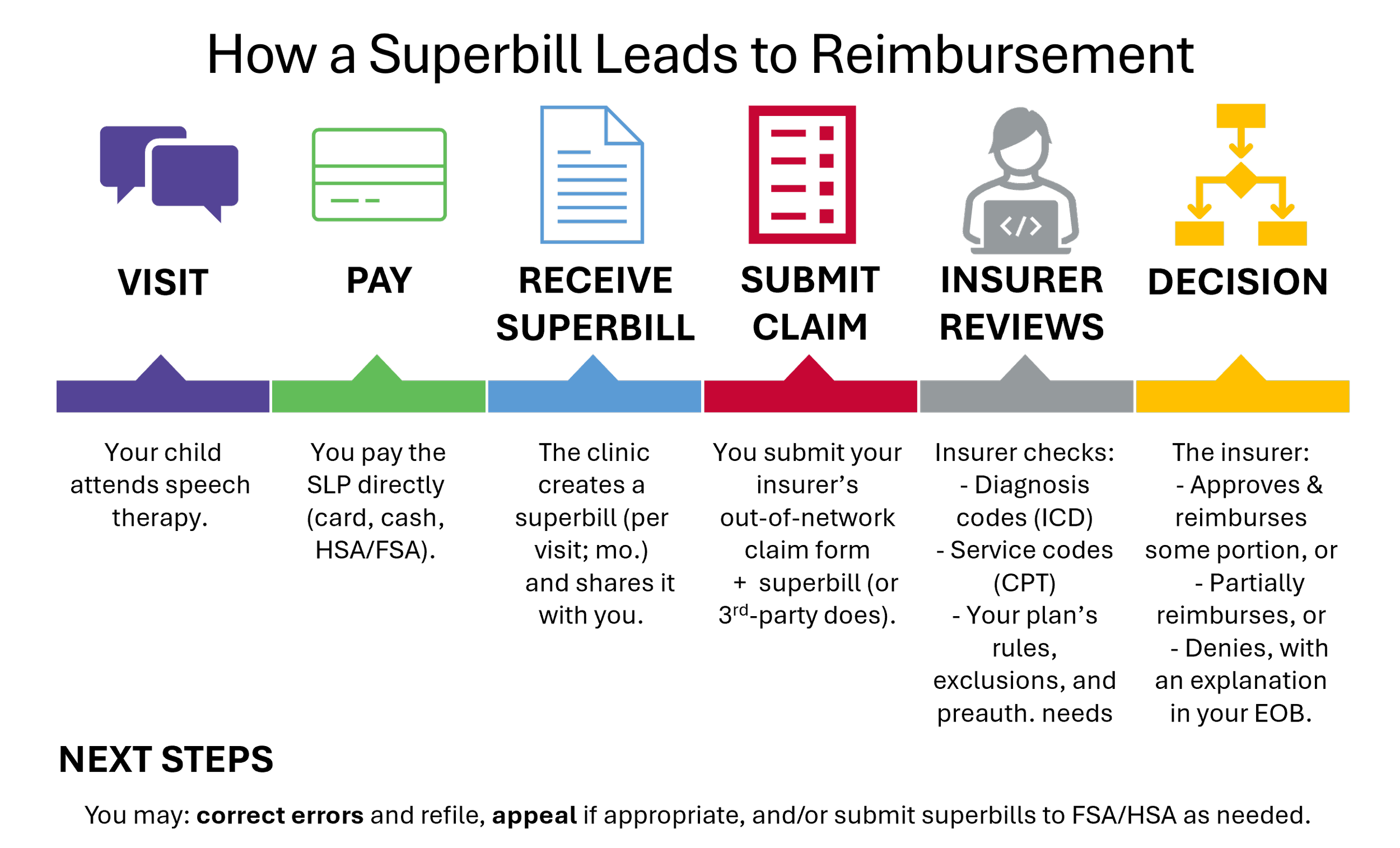
Unfortunately, not. We’re an out-of-network provider, which means you pay directly and can submit for reimbursement through your insurance. Most families receive partial reimbursement for speech therapy under their plan’s “out-of-network speech therapy” benefits. We do provide a Superbill (itemized invoice with CPT/ICD-10 codes) to streamline insurance reimbursement.
We’re happy to help you navigate it step-by-step.
-
Play-led therapy means that learning and communication goals are built into activities your child genuinely enjoys. Instead of drills or flashcards, we use purposeful play—games, pretend scenarios, sensory activities, and hands-on exploration—to help children practice new sounds, words, and skills naturally.
When children are engaged and having fun, their brains are more open to learning. Play-led therapy builds connection, confidence, and communication through curiosity and joy—making progress feel like play, not work.
-
We believe parents deserve full transparency. That’s why we use a private, HIPAA-compliant Electronic Medical Records (EMR) platform where you can see your child’s evaluation results, goals, and every therapy note.
-
We are available before, during and after school and during weekends and many holidays.
Clinic sessions in Dumfries, VA
Home-based visits across Prince William County
Telehealth for those in Virginia
A hybrid approach to best met your family’s need during unique situations
-
Groups by need and age:
Social Communication Lab – build turn-taking, conversation, and friendship skills.
Intensive Literacy Group – strengthen phonological awareness, decoding, spelling, and early reading confidence in a structured small-group setting.
Speech-Sound Bootcamp – practice sounds in playful, peer-based activities.
Fluency Foundations – support confident, flexible speech for children who stutter.
Executive + Communication Skills – language and planning support for ADHD.
-
See our accepted methods of payment here.
-
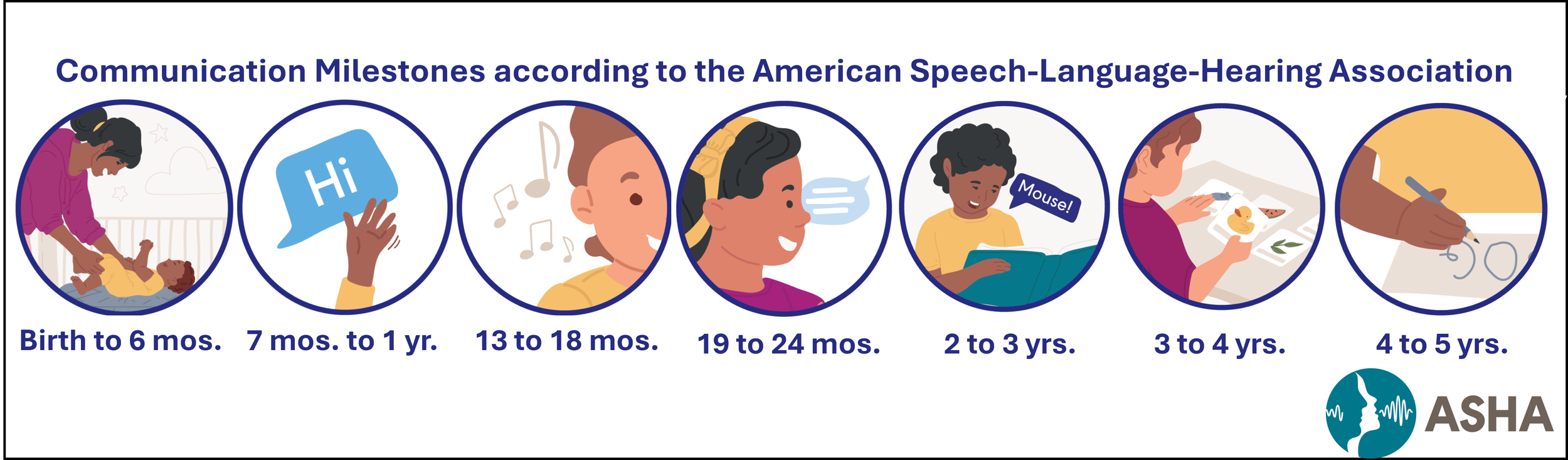
Your Child’s Communication Development: Birth to Five Years:
How does a child’s communication skills develop in their first five years of life? What milestones should caregivers expect—and what should they do if their child isn’t meeting these milestones? This video from the American Speech-Language-Hearing Association offers expert information and tips for families.
ASHA Communication Milestones
Wondering what speech and language skills to expect between birth and age five? ASHA’s Communication Milestones are a parent-friendly guide to early hearing, speech, and language development. The milestones can help you notice what your child is already doing, what skills may be emerging next, and when it may be helpful to speak with a speech-language pathologist.
ASHA’s Communication Milestones are more than a checklist. Each age range is connected to research-backed information that helps parents better understand how communication develops, what skills commonly emerge at different ages, why those skills matter, and how everyday interactions—such as play, reading, songs, routines, and conversation—can support speech and language growth.
These milestones are not a diagnosis or formal screening tool. Instead, they offer a helpful starting point for understanding your child’s communication development and knowing when to ask questions. If your child is not meeting many milestones for their age range, or if you feel concerned, Play to Say Therapy can help you decide whether a speech-language evaluation or parent consultation may be appropriate.
Best for: parents of children from birth through age five
Helpful for: speech, language, listening, gestures, early words, following directions, play, and early social communication
Use it to: learn what to expect, learn how to support communication at home, and know when to seek guidance
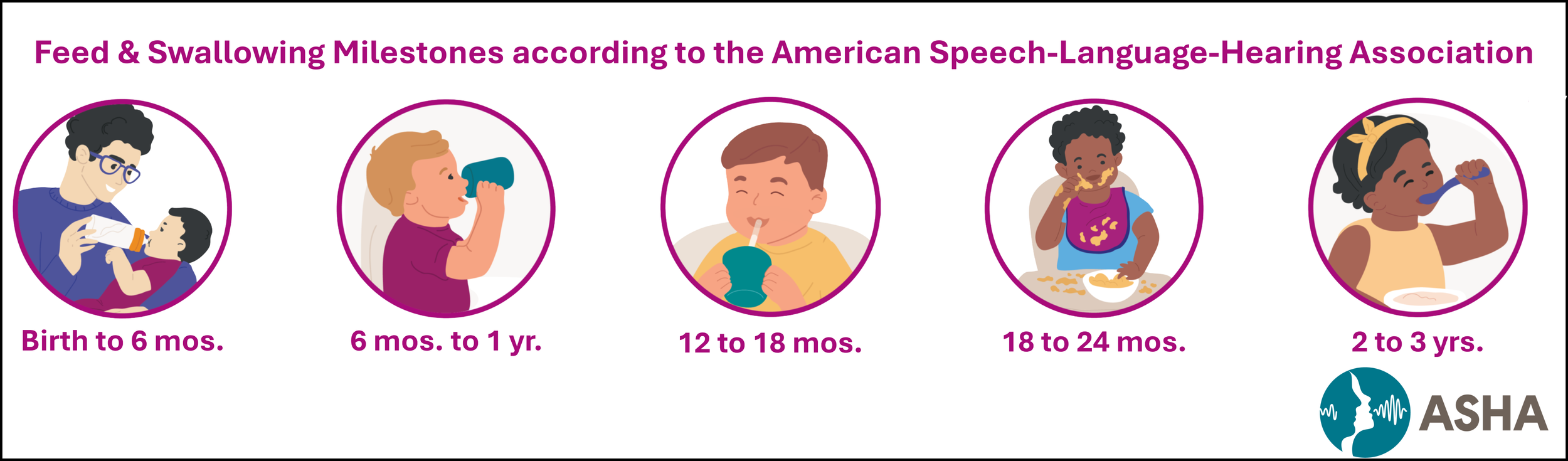
Your Child’s Feeding Development: Birth to Three Years:
Many parents have questions about how well their child is eating and drinking. This video from the American Speech-Language-Hearing Association identifies feeding milestones caregivers should expect in a child’s first three years of life. These milestones can help families better understand what’s typical as their child grows—and when they may need professional help from a speech-language pathologist.
ASHA Feeding and Swallowing Milestones
Wondering what feeding and swallowing skills to expect between birth and age three? ASHA’s Feeding and Swallowing Milestones are a parent-friendly guide to early feeding development, including breastfeeding, bottle-feeding, cup drinking, chewing, self-feeding, food textures, and mealtime participation. The milestones can help you notice what your child is already doing, what skills may be emerging next, and when it may be helpful to speak with a speech-language pathologist.
ASHA’s Feeding and Swallowing Milestones are more than a checklist. Each milestone is supported by research, reviewed by subject-matter experts, and reflects the ages by which at least 75% of children worldwide have mastered the listed feeding and swallowing skills. This gives families a research-backed way to better understand how feeding develops, why skills such as chewing, cup drinking, self-feeding, and managing new textures matter, and how everyday routines—such as meals, snacks, play with food, and cooking together—can support healthy feeding growth.
These milestones are not a diagnosis or formal screening tool. Instead, they offer a helpful starting point for understanding your child’s feeding and swallowing development and knowing when to ask questions. If your child is having trouble breastfeeding, bottle-feeding, drinking from a cup, chewing, swallowing, eating solid foods, tolerating textures, or participating in meals, Play to Say Therapy can help you decide whether a feeding consultation, speech-language pathology evaluation, or referral to another provider may be appropriate.
Best for: parents of children from birth through age three
Helpful for: breastfeeding, bottle-feeding, cup drinking, chewing, swallowing, self-feeding, food textures, and mealtime participation
Use it to: learn what to expect, learn how to support feeding at home, and know when to seek guidance