
Small-Group Speech Therapy for Social Communication
Some children need more than reminders like “use your words.” They need supported practice learning how to join play, handle conversation, understand others, and communicate more successfully with peers in everyday life.
Small-group speech therapy gives children a structured, supportive place to practice real-life communication with other children.
Is your child having a hard time connecting with peers?
You may be noticing that your child wants to interact, but struggles with the back-and-forth of play, conversation, or group situations.
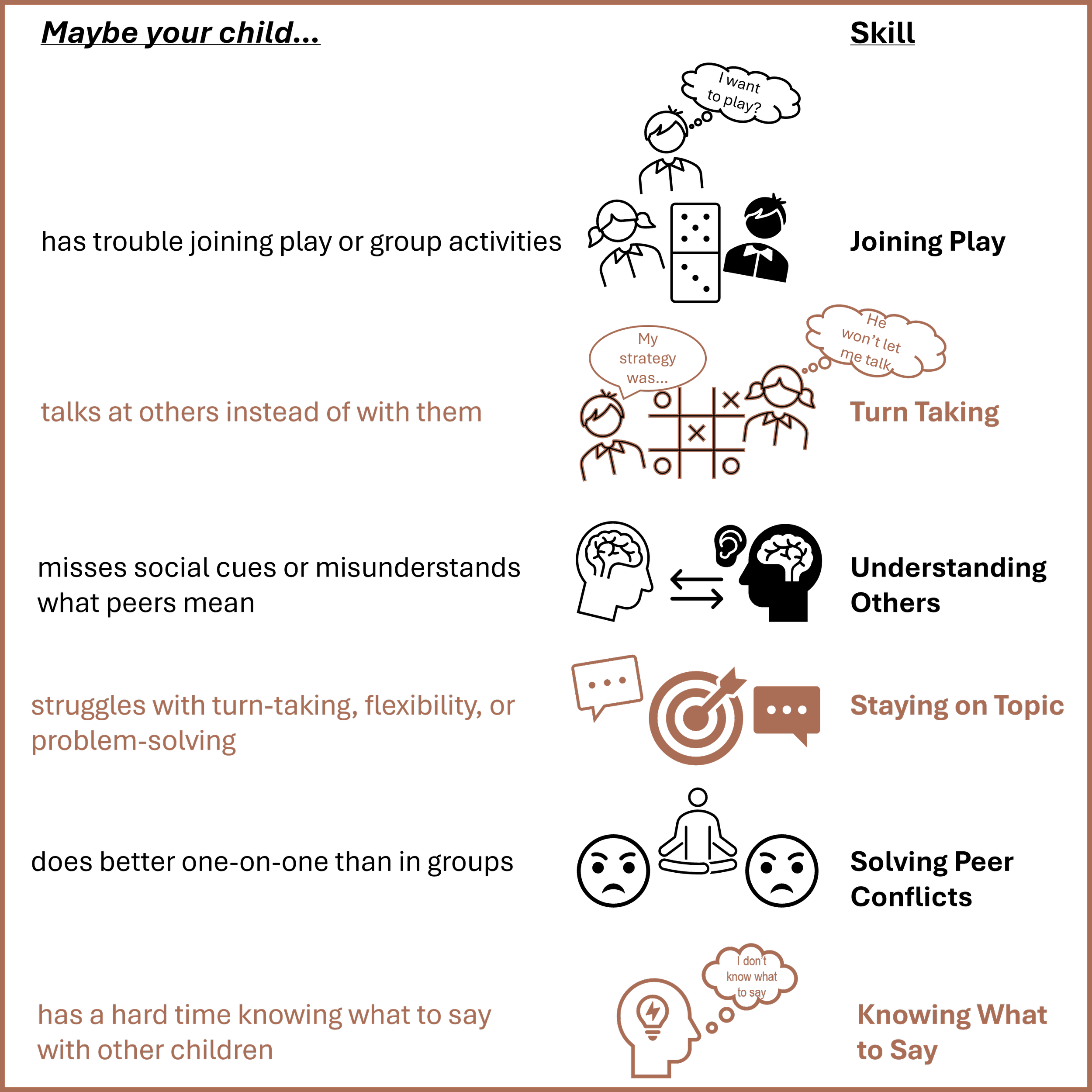
For many families, the concern is not just “social skills.” It is whether their child can participate, connect, and communicate more successfully in daily life.
What is social communication?
Social communication is how we use language with other people in real life.
It includes knowing how to start interactions, respond to others, take turns, stay on topic, read the situation, and repair misunderstandings when communication breaks down.
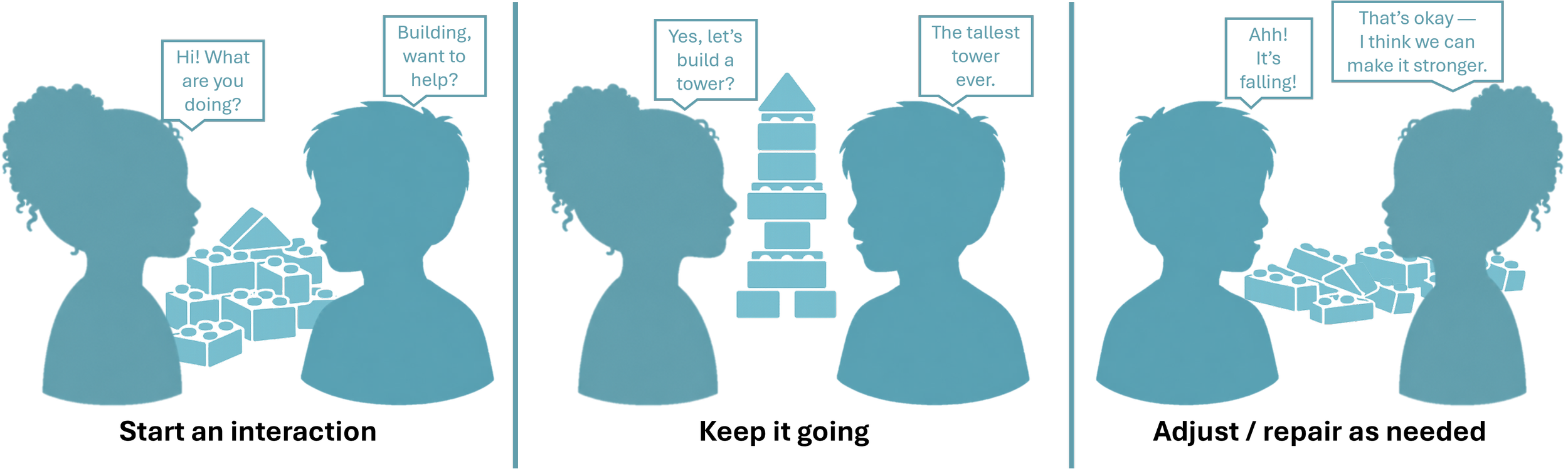
In other words, social communication is not just talking. It is knowing how to use communication to connect, participate, and build relationships.
Why a small group can help
Some communication goals are best practiced with other children.
A small group gives children the chance to practice in real time with peers, clinician support, and meaningful feedback. Unlike one-on-one therapy, group interaction is more dynamic and less predictable.
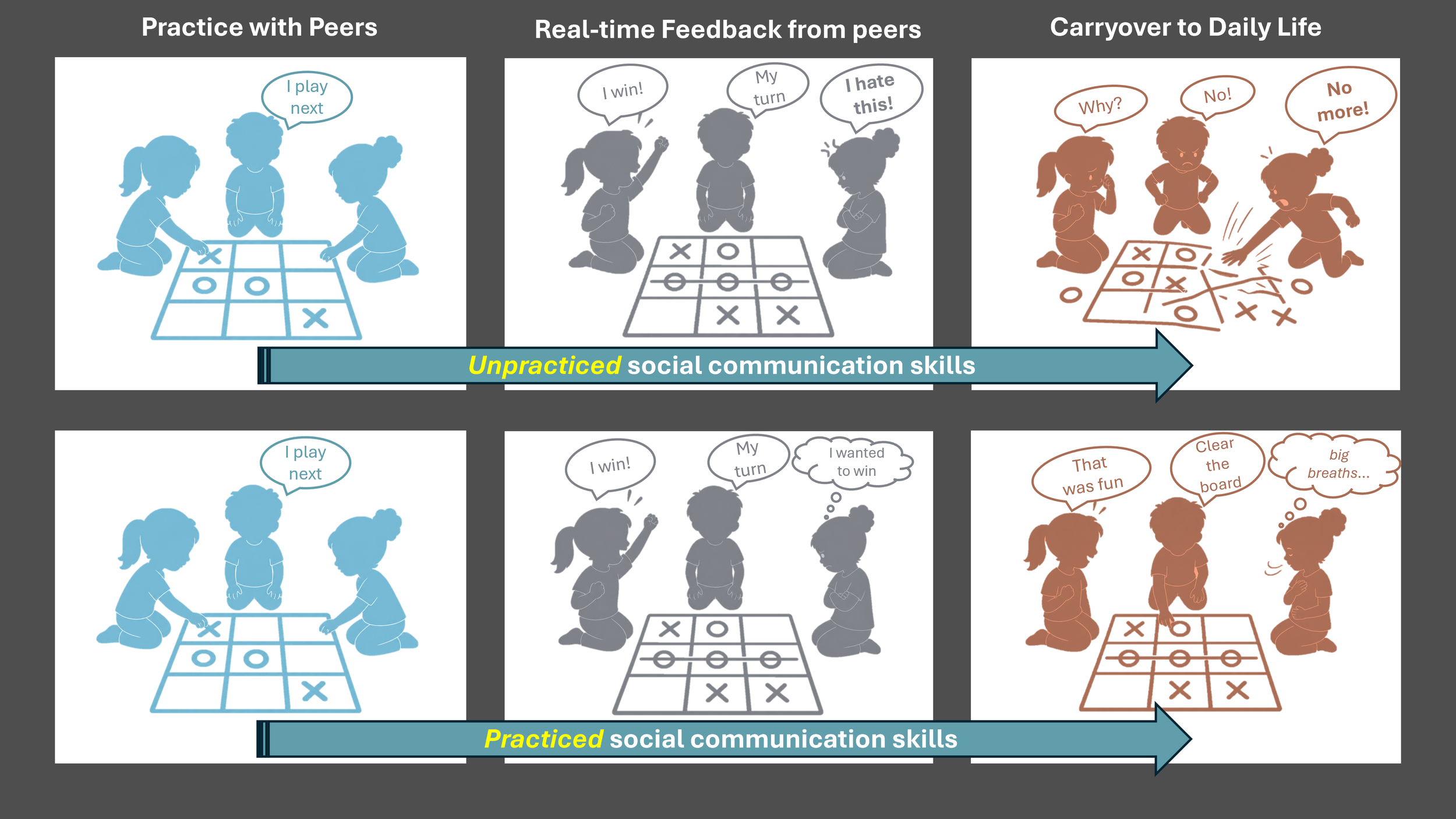
Peers respond to each other in ways that adults cannot fully recreate. They may support each other, challenge each other, misunderstand each other, or react in unexpected ways.
That matters because real-life social situations are rarely scripted. As the group changes, children have opportunities to practice joining in, reading the room, handling frustration, solving problems, and adjusting their communication with different partners.
Peers are also usually less patient with each other than a therapist would be. They may interrupt, disagree, test boundaries, or create new conflicts. With support, those moments become valuable opportunities to practice flexible thinking, self-advocacy, perspective-taking, communication repair, and regulation.
Rather than only talking about social situations, children get real opportunities to work through them through games, shared activities, role-play, and guided problem-solving.
The goal is not to make every child communicate in the same way. The goal is to support more successful, meaningful communication in everyday life.
What we may work on in group
Each group is built around the children in it, but goals may include:
Initiating and responding to peers
Greetings and social routines
Turn-taking in conversation and play
Commenting, asking questions, and keeping interaction going
Topic maintenance and shifting appropriately
Perspective-taking
Reading nonverbal communication
Handling frustration, winning, losing, and compromise
Problem-solving in peer situations
Communicating more effectively across settings
Who this may be a good fit for
Small-group speech therapy may be a good fit for children who need structured support with peer interaction, conversation, play, flexibility, and participation in group settings.
This may be a good option for children who:
want to connect, but are not sure how to join in
need help keeping interaction going
benefit from modeling, visual support, and guided practice
have difficulty with peer problem-solving or flexible communication
may be neurodivergent and benefit from respectful, strengths-based communication support
Some children are ready for group right away. Others benefit from individual support first. Sometimes the best plan includes both.
How we determine whether a group is the right fit

The first step is a free 15-minute discovery call. From there, we can talk through whether a social communication group, individual therapy, or further evaluation makes the most sense.
Discovery call – Share your concerns and ask questions about whether group support may fit your child.
Screening or evaluation, if needed – We look at strengths, support needs, goals, and readiness for peer interaction.
Thoughtful group matching – We consider age, communication profile, regulation, and overall fit before recommending placement.
Therapy with purpose – The goal is meaningful progress. We want children to gain the skills they need and families to feel confident moving forward. Throughout the process, families can expect a partnership. You can also expect an advocate for your child’s short- and long-term well-being.
Why families choose Play to Say Therapy
Families are looking for more than a generic group. They want thoughtful support that helps their child participate more successfully in real life.

Experienced clinical judgment – Support that looks at the whole child, not just one isolated symptom.
Relationship-based care – Playful, supportive sessions designed to help children participate rather than perform on command.
Neurodiversity-affirming approach – Communication support that respects the child and focuses on meaningful participation and authentic growth.
Practical parent guidance – Clear feedback and strategies that carry over into daily life, not just the therapy room.
Frequently Asked Questions
-
Sometimes yes, and sometimes a brief screening or consultation is the better first step. We can talk through that during the discovery call.
-
Groups are typically formed based on age, communication level, and overall fit. The best match depends on the children currently being placed.
-
That does not automatically rule group out. Some children need warm up time, extra support, or individual groundwork first. Fit is determined thoughtfully, not by a one-size-fits-all standard.
-
No. Social communication challenges can affect many children for many reasons. Some neurodivergent children benefit from this support, and so do other children who need help with peer interaction, conversation, flexibility, or group participation.
-
Not always. Some children do well with group alone. Others benefit most from a combination of individual and group therapy.
-
Availability may vary. You are welcome to book a discovery call or join the interest list for future group opportunities.